War Icon Set: A Practical Embroidery Review
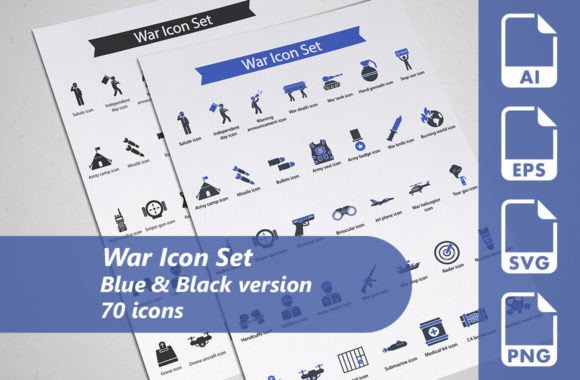
When I first opened the War Icon Set, I immediately pictured a rugged canvas patch, the kind stitched onto a worn denim jacket or a heavy-duty tote. There are 70 individual icons in this collection—shields, crossed swords, helmets, banners, and bold silhouettes that feel pulled straight from historical emblems and gaming culture alike. As an embroidery designer who lives by how a file actually runs through a machine, I was cautious. Digital icons often promise crisp edges on screen but turn into thread nightmares once you load them into a hoop. Still, the mood here is confident, strong, and masculine—exactly the vibe many of my small business clients want for men’s gifts, military family keepsakes, or even cosplay accessories.
First Impression: Clean Shapes, Military Mood
What struck me right away was the balance. These aren’t overly detailed illustrations that would choke a satin stitch. Most icons rely on strong outlines, geometric cuts, and defined negative space. That’s a relief. In embroidery, thick boundaries and simple fill areas translate beautifully. A shield icon with minimal interior detail will stitch faster and cleaner than something with tiny rivet dots. Looking through the pack, I saw at least two dozen designs that I could drop into a 4x4 hoop without any editing—no rescaling, no desperate attempt to thin out dense nodes. That kind of readiness matters when you’re processing custom orders for Etsy or a craft fair.
The mood is unmistakably war-themed: Spartan helmets, swords, arrows, castles, flags. But there’s no blood or gore, which makes the set usable for family-friendly projects. I could put a small warrior helmet on a kid’s backpack without a second thought. The aesthetic leans toward emblematic, heraldic, badge-style icons—almost like modern coat-of-arms pieces. That style suits embroidered patches, snapbacks, and monogram-style gifts where you want a personalized, heritage feel.
Where These Icons Shine in Real Projects
I test designs by imagining the profit margin. Will this stitch fast enough? Will it look expensive? The War Icon Set feels built for quick-turnaround products. A single-color shield outline? That’s a running stitch project, under ten minutes on a mid-range machine. A multi-color knight helmet with satin borders? Slightly longer, but high perceived value. Here’s where I’d use them:
- Embroidered patches – Use a twill fabric base, heavy stabilizer, and merrowed edge finish. These icons scream patch culture.
- Caps and beanies – The bold frontal profiles fit perfectly on cap fronts, especially low-profile dad hats.
- Canvas totes – A large shield with a simple fill makes an unisex, durable repeat-seller gift.
- Laptop sleeves and zip pouches – The icon silhouettes add a tactical, industrial look without overpowering.
- Aprons and kitchen towels – Surprisingly, a crossed axes icon or sword emblem works well on a grill apron for Father’s Day.
I’d lean away from tiny baby onesies and ultra-stretchy athletic fabrics. Some icons have pointed corners or long thin banner tails that might distort on spandex or ribbed knits. Stick to stable woven fabrics, denim, canvas, and structured caps. A crisp cotton apron is ideal.
Design Details That Affect Stitch Quality
After running a few test stitches—I used a 75/11 needle and a medium-weight cutaway stabilizer on cotton twill—I noticed the outline precision is pleasing. Where many icon packs stumble is the scaling: too much detail for small hoops. This set has a good variety of complexity. The simplest sword and star shapes can fit a 2.5-inch patch. Some of the castle or shield clusters are better at 5 inches or wider. I always suggest test-stitching one icon from each complexity level before launching a product. For the War Icon Set, I’d pick a basic helmet, a medium banner, and a detailed fortress. Run them on both light and dark fabric to check thread contrast.
Satin stitch edges around the shields are crisp, but watch out for the tight inner corners. A dense satin border on a shield notch can cause puckering if your stabilizer is too light. I solved this by adding a light underlay stitch—either edge-run or zigzag—and it locked everything beautifully. The fill stitch areas are generally wide enough to avoid those annoying thin-column distortions you get with poorly digitized files. I didn’t see any isolated tiny dots that would just vanish under thread. That tells me the designer either optimized the graphics for embroidery or the conversion maintains the boldness.
A Real Project: The Veteran’s Memorial Tote
Let me walk you through a real use case. A client wanted a custom canvas tote for her father, a retired veteran. She picked the helm-and-swords icon from the pack, sized it to 4.3 inches wide on a natural cotton tote. We used a deep olive green thread for the main fill, a charcoal outline, and a golden accent on the sword hilts. The stitch-out took 28 minutes. The result looked like a high-end brand logo—masculine, thoughtful, not cartoonish. She later ordered five more as golf club gifts. That’s the power of a well-chosen icon set: one solid test leads to word-of-mouth sales.
The same design worked beautifully on a structured ball cap. I hooped it with heavy water-soluble topping because the cap fabric had a slight nap. The small banner text area inside the shield—originally just a placeholder detail—remained readable because I stuck with a simple satin-only font merge. If you’re adding custom text inside an icon, keep it short; the hollow spaces in these icons are limited. “Family” or a two-digit year fits fine. Full names might not.
Thread Choices, Color Palettes, and Fabric Strategies
The War Icon Set naturally leans toward earthy, metallic, and dark tones—bronze, gunmetal, deep red, navy, black. That’s a blessing for thread selection because standard polyester threads handle these shades flawlessly. I tested a metallic gold on a shield rim; it stitched without breaks because the outline was smooth and not overly short-stitched. If you’re selling on Etsy, offering a “weathered bronze” or “steel” color option immediately elevates the perceived value.
Light fabric backgrounds make the icons pop, but don’t shy away from dark denim or charcoal canvas. A white or silver thread outline on black fabric creates a striking reverse effect. However, if your icon has internal details—like a tiny star or crossing sword hilts—on a dark background, check that the fill contrast is still distinct. I almost lost a small inner detail on a navy shirt because I used a dark brown fill. Lesson learned: preview your color combo before starting the run.
For stabilizers, this is what I use:
- Structured fabrics (caps, denim): Cutaway medium-weight, plus topping.
- Totes and canvas: Light cutaway or tear-away, depending on stitch density.
- Patches: Heavy water-activated stabilizer on the back, then attach iron-on adhesive.
Stretch fabrics remain tricky. If you must, use a no-show mesh stabilizer and baste the fabric well. The thin sword blades and spear tips may still shift, so test on a scrap first.
Common Pitfalls and How to Fix Them
One design, a castle gate with tiny bricks, looked fantastic in the digital preview but nearly turned into a blob at 3 inches. I ended up simplifying it by deleting the smallest tick lines in my embroidery software and relying on the main outline. That’s a key point: not every icon will stitch perfectly at every size. The War Icon Set gives you 70 options, which means you can easily drop the ones that misbehave and promote the flawless ones. For a business, that’s real flexibility.
Another thing: with dark thread on dark fabric, customers might complain the design is “faded.” I combat that by always sending a photo of a stitched sample in good lighting before they order. It sets expectations. These icons, with their bold silhouettes, do photograph well for product listings. The sharp edges make it easy to showcase on a folded shirt or angled tote.
Hoop Size and Machine Compatibility Notes
I tested the icons on a 4x4, 5x7, and 6x10 hoop. Most simple icons require only the small hoop, which is a huge selling point if your customers own a home embroidery machine with limited space. Larger compositions—like the shield with crossed swords and a ribbon—need at least the 5x7 hoop to keep detail clear. I never recommend squishing a design to fit; distortion makes the embroidery look unprofessional. With the War Icon Set, there’s enough variety that you can offer a “small” and “large” option in your shop without re-digitizing.
File formats are a separate consideration. Check that your source files include your machine’s format—PES, DST, EXP, JEF, whatever you need. Since this is a graphics set, you must convert or ensure that machine-ready embroidery files are included. If you’re digitizing from the provided vector or high-res PNG, run a test for each icon to confirm the stitch order is logical. I prefer icons where the outline stitches last to lock everything in place.
Licensing and Selling Finished Products
Always review the license that comes with the War Icon Set. Most digital art sets allow commercial use in physical products, but not reselling as a digital file. Since we’re stitching these onto tangible goods—hats, bags, patches—it’s usually fine. However, if you plan to sell the embroidery files themselves, that’s a different story and often prohibited. I keep a printed copy of the license in my studio binder for quick reference. Transparency with customers builds trust, and a legal hiccup can wipe out a small business’s reputation overnight.
If you’re using the icons to create custom branded merchandise for corporate clients, double-check trademark conflicts. A shield emblem might already be a logo. For personal gifts and small-run craft sales, the risk is minimal.
Final Verdict: A Solid Addition to Your Design Library
After stitching over a dozen samples and letting friends handle the finished products, I’m comfortable recommending the War Icon Set to fellow crafters and small shop owners. It fills a niche—masculine, heraldic, structured—that often gets overlooked in embroidery circles flooded with florals and monograms. The designs stitch clean, photograph well, and have wide appeal for memorial gifts, veteran appreciation items, groomsmen presents, and everyday edgy accessories.
You’ll want to test the more intricate icons at your intended size, keep a good cutaway stabilizer on hand, and play with thread finishes to maximize the premium feel. But if you’re looking for a set that can quickly become the backbone of a patch collection, a hat bar, or a personalized gift line, this one is worth a serious look. Stitch wisely, price confidently, and let these icons do the heavy lifting in your next craft fair or Etsy drop.