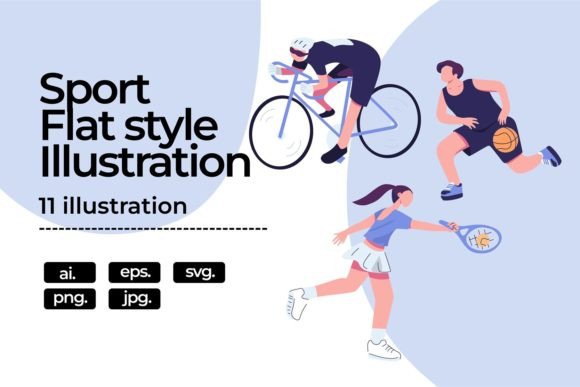
Sports Illustration Flat Design For Embroidery Projects
I see a lot of design packs cross my desk, but every once in a while something stops me mid-scroll. The Sports Illustration Flat Design pack did exactly that. Eleven sport categories, all rendered in that crisp flat style that feels modern without trying too hard. The first thing I noticed was the personality tucked inside those simple shapes. A soccer ball frozen mid-kick, a swimmer slicing through imaginary water, a runner caught in that perfect stride. These are not fussy illustrations. They are clean, pared down, and surprisingly confident.
When I think about this from an embroidery standpoint, my brain immediately starts running through fabric types, thread choices, and how these shapes will translate once a needle gets involved. Flat design is a friend to machine embroidery in ways that ultra-detailed artwork sometimes is not. Bold silhouettes, clear contours, minimal internal shading. That is the recipe for a design that stitches clean and reads fast, even from across a room. The Sports Illustration Flat Design pack leans hard into that strength.
First Look At The Sports Illustration Flat Design Pack
Opening the folder gave me that quiet satisfaction of a well-organized asset collection. Eleven illustrations, each covering a different sport, and every file delivered in five formats. I am looking at EPS, AI, SVG, PNG, and JPG. For a designer who moves between embroidery digitizing software and layout tools, having vector options like AI and EPS is essential. The SVG format makes it simple to pull elements directly into design programs without conversion headaches. The PNG and JPG files sit ready for quick mockups, previews, or listing photos.
The flat style itself carries a warm, approachable energy. These are not aggressive sports graphics. They feel playful, inclusive, and easy to live with. I could picture a child wearing a hoodie with the basketball figure stitched small on the chest, or a gym towel with the cycling illustration tucked into a corner. The mood is active without being loud. That balance matters when you are designing products meant to appeal to a broad range of buyers.
One thing I appreciated immediately was how the illustrations avoid overcomplicating the human figures. Simplified limbs, rounded joints, just enough detail to tell the story. In embroidery terms, fewer tiny cutouts and delicate intersections means fewer places where thread tension can go wrong or where small details collapse into blobs on textured fabric. That is a real advantage when you are stitching on fleece, canvas, or knit surfaces.
How These Illustrations Behave In Real Embroidery Projects
Let me walk you through how I approach a pack like Sports Illustration Flat Design when I have an actual product to make. A few weeks ago, a client asked me to create a custom tote bag for a youth sports camp. They wanted something energetic but not juvenile, something parents and kids would both appreciate. I pulled up the running figure and the soccer illustration from this pack. After a quick digitizing pass, I stitched samples onto medium-weight cotton canvas.
The results surprised me in the best way. The running figure translated into a smooth satin stitch outline with minimal trims. The soccer player's posture stayed readable even at a reduced size, around four inches tall. I did need to simplify a couple of the thinner internal lines, but that took five minutes in my digitizing software. The core shapes held up beautifully. On a natural cotton tote, the design looked intentional and polished, exactly the kind of product that makes people stop at a craft fair booth.
I also tested the cycling illustration on a crewneck sweatshirt. Fleece can be unforgiving with fine detail. The fibers push back against dense stitching and tiny elements get swallowed. But the cycling figure, with its bold wheel shape and clean rider silhouette, came through sharp. I used a medium-weight cutaway stabilizer, kept the stitch density moderate, and the finished embroidery had that crisp boutique feel. The flat design style genuinely helped here. No gradients to simulate, no fussy shading to lose in the fabric texture.
For anyone running an Etsy shop or small handmade business, the ability to produce consistent, professional results across different fabric types is a quiet superpower. The Sports Illustration Flat Design pack offers that kind of reliability because the artwork itself is built on strong, simple bones.
Where The Sports Illustrations Shine Brightest
After testing several pieces, I have strong opinions about where these designs belong. Tote bags are an obvious win. So are pillow covers for a sporty kid's room, kitchen towels for a game-day setup, and simple unisex t-shirts. I kept picturing a set of embroidered patches using the tennis and swimming illustrations, stitched on felt or twill, with a clean merrowed edge. Sold as iron-on patches or sew-on accents, those would move fast at a pop-up market or in a sport-themed product bundle.
Baby and toddler apparel is another sweet spot. The soft, rounded shapes in the Sports Illustration Flat Design pack feel gentle enough for a onesie or tiny tee. A small baseball figure stitched on a baby bodysuit, paired with a little cap, creates a gift that feels thoughtful without being overly complicated to produce. Parents and grandparents eat that up, especially when the design looks intentional rather than slapped on.
Aprons and kitchen textiles surprised me during testing. The golf illustration, stitched in dark green thread on a natural linen apron, gave off a relaxed country club vibe. I could easily see this working for Father's Day gifts, groomsmen presents, or boutique kitchenware lines. The flat style keeps things modern, avoiding the dated clip-art feel that plagues some sports-themed embroidery.
Knowing When To Hold Back
No design works everywhere, and honest evaluation means talking about the limits. The Sports Illustration Flat Design illustrations have some internal negative space that needs attention when you shrink things down. On a baby bib or a narrow hat front, details like fingers, facial features, or thin equipment lines could close up under dense thread. I would avoid pushing these below two and a half inches in height without significant simplification.
Stretchy fabrics also demand caution. Performance tees, thin jerseys, and lightweight knits shift under the needle. Even with a solid stabilizer strategy, small details can distort. I recommend testing on scrap fabric first, especially if you plan to stitch on moisture-wicking blends or ribbed tank tops. The designs will work, but you need to dial in your hooping technique and possibly increase pull compensation.
Caps and curved surfaces present another layer of challenge. The horizontal nature of many sports poses, arms extended, legs in stride, means the design spreads wide. On a structured cap front, the curved surface can warp a wide design if you are not careful about placement and digitizing adjustments. I would lean toward the more compact illustrations, like the weightlifting or golf figure, for hat applications.
Dark fabrics require a bit more thought too. The flat design style relies on contrast between the figure and the background. On a black tote or navy sweatshirt, you want thread colors that pop hard against the fabric. Test your thread choices on the actual material before committing to a full run. A design that looks brilliant on white canvas can disappear on charcoal fleece if you do not adjust your palette.
Practical Notes For Embroidery Designers And Makers
Before you load these illustrations into your digitizing program, there are a few workflow habits I recommend. First, always test stitch on the same fabric and stabilizer combination you plan to use for your final product. What works on woven cotton can behave completely differently on a stretchy French terry. Second, check your thread color contrast in natural light and under indoor lighting. Colors shift, and what reads as high contrast on screen can fall flat in thread.
Stitch density is another variable worth managing. The flat design aesthetic benefits from clean, smooth fill areas. Overly dense stitching creates a stiff, bulletproof patch that feels uncomfortable on apparel. I aim for a density that gives solid coverage without turning the fabric into cardboard. A slight fabric show-through can actually enhance the handmade, soft feel that customers respond to positively.
Mockup testing saves time and money. I like to do quick black-and-white placement tests before I even open my digitizing software. Printing the illustrations at actual size and taping them onto garments gives me a realistic sense of proportion and position. It is a simple step, but it prevents the heartbreak of stitching out a beautiful design in entirely the wrong spot.
For commercial embroidery projects, licensing awareness is non-negotiable. The product description indicates these files are good for website design, presentation, and infographic work, but you need to confirm the license terms before selling finished embroidered products or digital embroidery files derived from these illustrations. Reach out to the seller, read the fine print, and make sure your intended use aligns with the permissions granted. A little diligence upfront protects your business in the long run.
Why The Flat Design Approach Wins For Embroidery
There is a reason flat illustration style keeps showing up in successful embroidery collections. The visual language translates directly into thread. Clean edges become satin stitch borders. Solid color blocks become fill stitch areas. The absence of gradients, drop shadows, and photographic textures means fewer decisions about stitch types and less risk of a muddy final result. The Sports Illustration Flat Design pack fully embraces that logic.
From a branding perspective, these illustrations carry a cohesive personality. If you build a small product line around sports-themed items, using multiple illustrations from this pack creates visual consistency. A tote, a sweatshirt, a patch set, and a kitchen towel all feel like family when the artwork shares the same flat aesthetic. Customers notice that cohesion, even if they cannot articulate exactly why your booth or shop page feels more professional.
I also see value here for designers who sell printable mockups or digital design assets. The PNG and JPG formats drop right into product previews, Etsy listing images, and social media graphics. You can create a polished brand look without commissioning custom illustrations for every product variation. For a small business owner juggling production, marketing, and customer service, that kind of efficiency is a quiet gift.
One underrated aspect of the Sports Illustration Flat Design pack is how it handles the human element. The figures are stylized enough to avoid uncanny valley problems but recognizable enough to read instantly. A person walking past a craft fair table does not squint at your tote bag and wonder what the shape is. They see a runner, a swimmer, a tennis player. That instant recognition drives impulse purchases. Buyers connect with the sport they love or the one their kid plays, and the decision to buy shifts from logical to emotional.
Where I See This Pack Living In A Product Line
If I were building a seasonal collection around youth sports, I would pull the soccer, basketball, and baseball illustrations into a coordinated set. Embroider them on matching totes, zip pouches, and simple crewneck sweatshirts. Package them as team gift bundles or end-of-season coach presents. The flat style keeps the cost manageable because the stitch counts stay reasonable, and the production time per piece stays predictable.
For the holiday gift market, I could see the ice skating and skiing figures stitched onto cozy blankets or plush scarves. Winter sports have a nostalgic pull, and a simple embroidered skater on a fleece throw feels like a thoughtful present without requiring a massive time investment from the maker. Combine that with coordinated gift wrap and a handwritten tag, and you have a product that commands a premium price point.
The digital product angle should not be overlooked either. If you sell digitized embroidery files, these illustrations could become a foundation for a sports bundle. Obviously, check the license before you digitize and resell. But if the terms allow it, a well-digitized set of eleven sport designs, tested and ready to stitch, fills a real gap in the embroidery marketplace. Many embroidery designers hunt for clean vector artwork to build their digital catalogs, and this pack delivers exactly that.
After spending time testing, stitching, and thinking through real applications, I believe the Sports Illustration Flat Design pack earns its place in a working designer's toolkit. The artwork is versatile, the file formats cover multiple workflow needs, and the flat aesthetic solves more embroidery problems than it creates. For makers who want sport-themed products that feel modern rather than dated, this collection offers a solid foundation. Start with a test stitch, respect the size limits, choose your fabric wisely, and these illustrations will pay for themselves quickly in finished product sales and happy customer reactions.