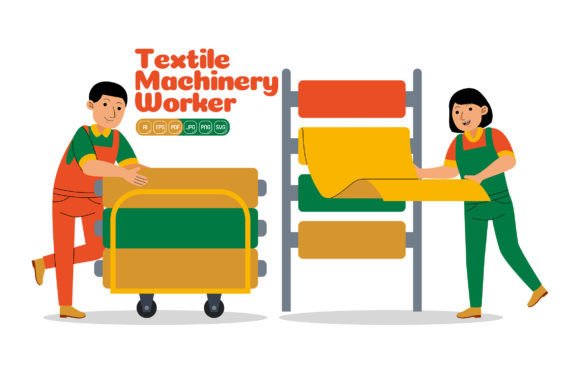
Man and Woman Textile Machinery Worker Graphics Review
When I unzipped the folder for Man and Woman Textile Machinery Worker, my first thought was how few illustration sets tackle industrial and vocational themes with a balanced artistic hand. Most factory or machinery visuals lean too cold, too mechanical, or too dated for modern online selling. This one took a different route. The linework feels deliberate without being stiff, and the figures carry a quiet dignity that could work across several niche product categories.
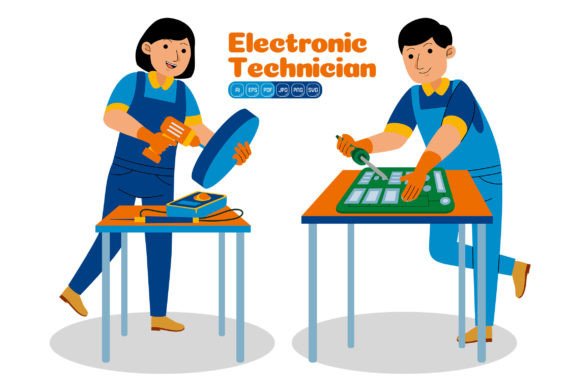
As someone who regularly tests graphic design assets before committing them to a printable design collection or Canva template series, I paid attention to the emotional tone first. The illustrations present a man and a woman operating textile machinery with posture and expression that suggest craftsmanship rather than generic labor. That matters. Buyers browsing Etsy products or digital downloads often respond to the human element before they process the visual style. These figures feel grounded, respectful, and versatile enough to serve both educational and decorative purposes.
Visual Personality and the Niche Buyer
The mood lands somewhere between vintage industrial and modern heritage. There is a slight mid-century engraving quality to the line treatment, softened by smooth contouring that keeps the figures readable at thumbnail size. The illustrations do not scream for attention with flashy details. Instead, they settle into a steady, honest presentation that would attract buyers looking for workshop decor, textile history artwork, or maker-themed stationery.
I could picture this graphic design asset appealing to several audience segments. A small business owner selling sewing room prints might pair it with antique thread labels. A print-on-demand shop specializing in tradesperson gifts could adapt it onto mugs or canvas totes. A digital product creator building a bundle around industrial revolution themes would find the male and female worker dynamic particularly useful for storytelling across listings.
The visual personality leans decorative yet rooted. It is not playful or cute in the way nursery illustrations are. It is not minimalist in the Scandinavian sense. It carries a handmade warmth that feels appropriate for rustic branding, historical educational materials, or heritage-themed social media graphics. If your shop aesthetic tends toward elegant vintage, farmhouse industrial, or classic maker culture, the tone blends in comfortably.
Testing Across Real Product Scenarios
Before publishing any listing, I run a new illustration through a practical gauntlet. I loaded these files into my usual mockup templates to check how the artwork performs at different sizes and on different substrates. The Man and Woman Textile Machinery Worker figures held their clarity when scaled down for a planner sticker sheet and when blown up for a wide-format printable wall art panel.
On a standard eleven-ounce mug mockup, the design translated well. The details did not blur, and the monochromatic line style meant I did not have to fight with white toner settings on dark substrates. For t-shirt design previews, I tested the artwork on heather gray and natural cotton backgrounds. The contrast stayed strong without looking harsh. That gives me confidence listing it across merchandise graphics without needing heavy post-editing.
For Cricut project compatibility, I inspected the SVG file separately. The cut paths were clean, without stray nodes that sometimes plague bundled SVG designs. The separation between the two figures allowed me to isolate the man or the woman individually, which doubles the usable variations for customers. A crafter making iron-on decals for sewing room totes could use both figures together or split them across multiple products.
I also tested color variations. The product description mentions easy recoloring, and that held true. Swapping the default palette for sepia tones gave the artwork a nostalgic blueprint feel. Changing to navy and cream made it read more modern and suited for coastal or minimalist branding. That flexibility means a single PNG design can spawn multiple product variations without purchasing additional assets.
Where Man and Woman Textile Machinery Worker Performs Best
This graphic design asset shines in product categories where the illustration carries the visual weight. Printable wall art is the most obvious fit. The composition fills a vertical orientation naturally, and the subject matter suits gallery walls in sewing studios, tailor shops, textile classrooms, or artisan workspaces. I would frame a series around different textile trades and use these two figures as anchor pieces.
Greeting card designs benefit from the emotional tone. A retirement card for a seamstress, a congratulatory card for a fashion school graduate, or a thank-you card for a quilting mentor could all feature these illustrations without feeling forced. The male and female pairing also makes the artwork suitable for couple-themed maker gifts.
Social media graphics and blog graphics gain from the storytelling aspect. Content about textile history, sustainable fashion, slow stitching movements, or industrial heritage could anchor posts with these figures. The clean linework does not compete with overlay text, and the subject matter immediately signals the topic to scrolling audiences.
For design bundles, the Man and Woman Textile Machinery Worker artwork adds thematic depth. A bundle centered on sewing, tailoring, weaving, or industrial crafts would feel more complete with these figures included. Bundled assets that show related but distinct subjects tend to raise perceived value and justify higher price points on creative marketplaces.
Using the Artwork for Product Presentation
Product presentation can make or break a listing. I tested how these illustrations perform inside product mockups for thumbnail previews. On a framed wall art mockup with a neutral linen background, the design looked professional and gift-ready. On a digital download cover image, the artwork read clearly even when reduced to a small square in search results.
For brand consistency, I checked whether the line weight and shading style could sit alongside other illustrations in a shop catalog. The style is distinctive enough to be recognizable but not so idiosyncratic that it clashes with complementary design assets. Sellers maintaining a cohesive visual storytelling approach across multiple listings will appreciate that adaptability.
Click-through potential improves when thumbnail images feature artwork that tells a small story at a glance. A textile worker at a loom catches attention differently than abstract geometric patterns or generic floral designs. The specificity of the subject matter helps the right buyer self-identify. That can lead to higher conversion on platforms where browsing fatigue is real.
Where Caution Is Needed
No illustration works everywhere, and I note the limitations honestly. These figures include moderate detail in the machinery parts. When I scaled the artwork down to a tiny sticker design under one inch, some of the finer mechanical elements began to lose definition. For kiss-cut sticker sheets, I would keep the figures at a minimum of two inches wide to preserve readability.
For Cricut or Silhouette projects requiring very clean cutting lines, the intricate machinery portions need weeding attention. The cut paths are solid, but inexperienced crafters might find the smaller negative spaces challenging. I would include a simplified version in any SVG bundle to accommodate different skill levels.
On dark backgrounds, the default linework holds up if the stroke color is lightened appropriately. However, the default black-line version will disappear against navy or charcoal. Sellers planning sublimation designs for dark garments should test color inversion carefully. Sometimes the reversed look loses the vintage character that makes the artwork appealing.
In text-heavy templates, the figures could compete for attention if placed too close to headlines. I recommend using the artwork as a decorative accent rather than a background element when designing Canva templates or invitation templates with substantial copy.
Practical Seller Checklist Before Publishing
I keep a short verification routine for every digital product I list. For Man and Woman Textile Machinery Worker, the routine looked like this. First, I tested the artwork on three mockup styles: a framed print, a tote bag, and a phone case. Each preview confirmed the illustration scaled correctly and maintained visual appeal.
Second, I checked the PNG transparency. The background removed cleanly with no white fringe artifacts around the figures. That matters hugely for sellers who layer illustrations over colored backgrounds in Canva template designs or social media templates.
Third, I printed a test page at three hundred DPI on matte paper. The line quality translated faithfully from screen to physical print. No banding, no unexpected thin spots. For printable wall art sellers, print fidelity is non-negotiable.
Fourth, I reviewed the file organization. Clear naming conventions and logically separated file types reduce customer confusion and refund requests. If you bundle these illustrations into a larger pack, label each figure distinctly and provide a quick reference sheet.
Font Pairing Ideas for Complementary Products
When I build printable products around an illustration, font pairing shapes the final mood. For Man and Woman Textile Machinery Worker, I tested several combinations. A serif font like Garamond or Caslon reinforced the vintage industrial feel and worked beautifully for quote posters. A clean sans serif font in all caps gave the artwork a more gallery-like modern treatment.
For products aimed at the handmade community, a script font or handwritten font softened the mechanical subject matter nicely. I would use script sparingly for accent words rather than full paragraphs. A condensed display font paired with generous letter spacing created an architectural look that suited workshop branding.
The key is not letting the font overpower the artwork. The illustrations carry enough personality that typography should play a supporting role. I lean toward restrained font choices that echo the era and trade without distracting.
Commercial Licensing and Selling Safely
Before listing any product containing Man and Woman Textile Machinery Worker, I confirmed the commercial license terms. Sellers planning to use the artwork on physical merchandise, print-on-demand items, or digital downloads must verify that the license covers resale in those formats. Some licenses permit unlimited personal use but restrict commercial distribution. Others allow finished products but prohibit raw file redistribution.
I always keep a license summary in my project files. If a platform like Etsy, Creative Fabrica, or Shopify ever requests documentation, having the license accessible saves stress. For design bundles that include multiple assets from different sources, I track each license condition separately to avoid accidental violations.
Realistic Place in an Online Shop
If I were planning a seasonal digital download shop update, I would position Man and Woman Textile Machinery Worker as a core asset within a maker or vocational theme collection. The artwork would not carry an entire shop alone. No single illustration does. But as part of a curated set alongside thread spool graphics, sewing machine illustrations, tailoring tools, and textile pattern backgrounds, these figures add authentic human presence that flat object illustrations cannot provide.
For a small business selling packaging design or brand identity elements to artisan makers, the illustrations could appear on hang tags, care instruction cards, or thank-you inserts. The industrial yet warm aesthetic aligns with brands that emphasize craftsmanship and heritage.
After thorough testing across mockups, print samples, and cut files, I consider Man and Woman Textile Machinery Worker a solid workhorse graphic design asset. It does not promise endless versatility, and no honest reviewer would claim that. It does offer reliable performance in its lane: decorative, vocational, human-centered illustration work that connects with buyers who value making, machinery, and the hands behind the craft. For the right product collection, that is more than enough.