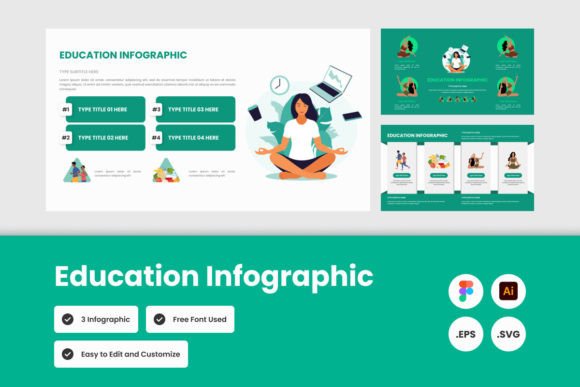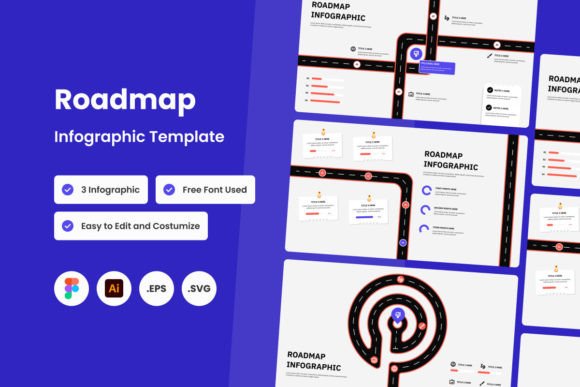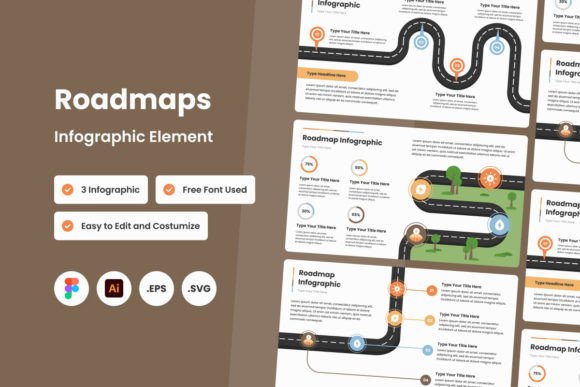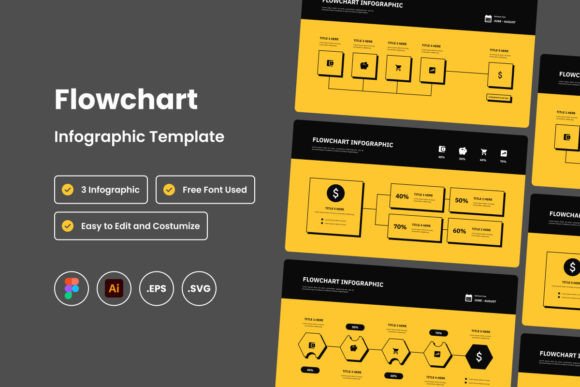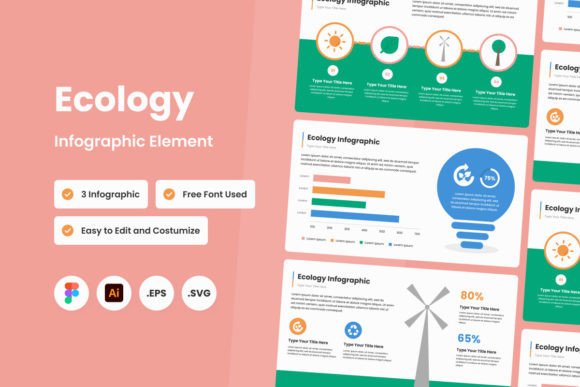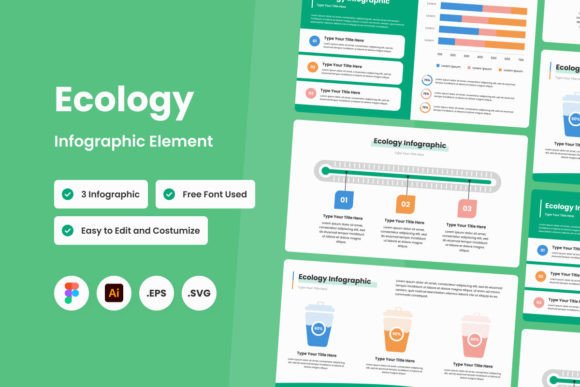
Ecology Infographic Template V3: Graphics & Infographics Review
First impressions matter when you are scrolling through thousands of graphic design assets looking for something that actually earns its place in your product lineup. Ecology Infographic Template V3 landed in my test folder last week, and I have spent several days checking it against real product mockups, thumbnail layouts, and print tests. The mood it carries is modern but grounded, more educational and clean than playful or decorative. It would attract buyers who run sustainability blogs, environmental educators, science communicators, zero‑waste shop owners, vegan brands, and handmade businesses built around natural themes. The visual personality sits between minimal and structured, with enough organic curves and leaf‑inspired accent elements to keep it from feeling sterile.
Visual Identity and Niche Appeal Inside the Template
This is not a whimsical woodland clipart set, and it does not try to be. The ecology angle is treated with a serious tone, which makes the infographics suitable for commercial planners, educational printables, impact reports, blog media kits, and Etsy listings that need to back up claims with visual data. The asset uses earthy greens, muted beiges, and soft slate tones that work beautifully on cream paper backgrounds and uncoated mockups. I noticed that the hierarchy between data points feels carefully considered, which saves time when you are dropping in custom text.
For creative entrepreneurs selling digital downloads, that time‑saving factor is real. Buyers in the environmental niche tend to be detail‑oriented, often checking whether statistics are presented clearly. Ecology Infographic Template V3 gives you a foundation that already respects visual hierarchy, so you can focus on tailoring the numbers and facts rather than rearranging chaos.
Testing the Template Across Product Formats
I tested this graphic design asset against several product formats currently in demand on Etsy and Creative Fabrica. Here is where it felt strongest:
- Printable wall art for home offices and classroom settings — the color palette prints cleanly without muddy transitions.
- Canva template listings — the layered file structure made it easy to rebuild inside Canva and offer as an editable download.
- Planner inserts and journal pages — the sectioned layout maps neatly onto A4 and letter sizes.
- Social media graphics for Instagram carousels and Pinterest pins — the vertical flow holds attention without overwhelming the viewer.
- Presentation slide decks for eco‑focused small business owners who pitch to conscious investors.
I also ran a quick trial designing a t‑shirt graphic and a tote bag placement. The template itself is not a single shirt design, but the individual icon elements and data modules extracted from it worked surprisingly well as centered chest prints and back panel layouts when recolored onto organic cotton mockups. This kind of repurposing is exactly what experienced print‑on‑demand sellers look for: an asset that multiplies into several product types rather than one.
Mug Designs, Tumbler Wraps, and Sublimation Potential
For mug designs and tumbler wraps, I would use the smaller stat modules rather than full infographic pages. Isolated circular charts, percentage badges, and small leaf accent icons from Ecology Infographic Template V3 transferred well onto 11oz mug mockups at 300 DPI. The contrast held on white ceramic, and the soft green tones felt natural rather than harsh under sublimation. On darker backgrounds, I needed to lighten the mid‑tones slightly to avoid losing detail, but once adjusted, the results looked like intentional branded merchandise rather than forced clipart.
How It Improves Product Presentation and Perceived Value
Thumbnail appeal can make or break a digital product on a crowded marketplace. I placed several module variations onto thumbnail mockups and noticed an immediate lift in the perceived expertise of the listing. Because the template already organizes content into digestible chunks, the eye naturally follows the sequence: headline, supporting stat, visual accent, call‑out figure. This kind of structure builds customer trust before they even read the product description.
If you are building seasonal bundles around Earth Day, World Environment Day, or sustainability awareness months, Ecology Infographic Template V3 helps maintain brand consistency across an entire collection. I paired the main infographic layout with matching color swatches across planner stickers, quote cards, and a freebie opt‑in page. The collection felt cohesive, which can justify higher bundle pricing.
Mockup Testing and Background Versatility
I previewed the template on white, kraft, and soft gray backgrounds. The transparent PNG modules handled all three without halo edges. On white, the muted palette stays subtle and elegant. On kraft, the earthy tones feel grounded and artisanal. On soft gray, the contrast sharpens just enough for clean product photography. This flexibility is useful for Etsy sellers who rotate product mockup styles across seasons.
Where You Should Apply Caution
Not every product category is a natural fit. When I scaled down the full infographic layout to a small sticker design, the text became illegible and the fine chart lines broke at smaller sizes. This is not a flaw of the template; it is a realistic limit of dense infographics. If your shop focuses on tiny kiss‑cut sticker sheets or intricate Cricut vinyl cuts, extract individual icons rather than using the full page layout.
Similarly, Cricut projects that require clean, continuous cutting paths need extra attention. When I tested an SVG export of a leaf chart element, the cut lines contained overlapping nodes that required smoothing in Design Space. A few minutes of node cleanup solved it, but if you plan to sell SVG cut files directly, budget time for path verification. This is standard practice with any commercial design asset, not a red flag unique to this product.
Text‑heavy templates can also feel crowded on mobile screens if you are adding lengthy paragraphs. I recommend keeping your final text additions concise and using the provided stat blocks as intended rather than overwhelming the layout with dense prose.
- Avoid using the full infographic on tiny sticker formats or low‑resolution prints.
- Be careful with dark backgrounds unless you adjust contrast manually.
- Inspect SVG cut lines before listing Cricut‑ready files, especially in delicate icon areas.
- Do not crowd the template with excessive text; let the visual structure breathe.
Practical Seller Notes Before Publishing Your Listings
Over years of selling digital downloads, I have developed a checklist that catches problems before customers do. Here is how I applied it to Ecology Infographic Template V3:
- Mockup realism. Test the design on at least three real product mockups, not just screen previews. I ran it through a framed print mockup, a spiral notebook cover, and an iPad screen display. The layout remained legible across all three.
- Thumbnail preview. Shrink the design to thumbnail size and check whether the main visual still reads. The bold section headers in this template passed the squint test.
- Background switching. Place it on white, cream, and dark mockups. The transparent PNG assets performed reliably, though dark backgrounds needed slight level adjustments.
- Print test. Print one page on matte paper and one on standard cardstock. Colors from the template stayed true to screen, with only a minor shift warmer on uncoated stock, which suited the earthy palette.
- Transparency check. Confirm PNG assets do not carry white boxing. All files I tested had clean transparency.
- SVG quality. For cuttable assets, open paths in Design Space or Silhouette Studio. A few nodes needed reduction on complex leaf shapes.
- Resolution confirmation. Verify at least 300 DPI at intended print size. The template met this requirement for all standard paper sizes.
- File organization. Rename files clearly before uploading to your shop. Buyers appreciate logical folder structures; I grouped by format rather than by color, which mirrored typical creative marketplace expectations.
- Font pairing. The template works well with sans serif headers for a clean modern look, but I also tested a serif font paired with a light script font for section callouts. The combination elevated the design without fighting the underlying structure. Handwritten fonts felt too casual for the data‑heavy sections, so use them sparingly on title accents only.
- Licensing. Always confirm commercial license terms before you sell finished products, especially on print‑on‑demand platforms where usage can be high volume.
Building a Cohesive Product Collection Around One Asset
One template can anchor an entire collection if you think modularly. Using Ecology Infographic Template V3 as the centerpiece, I built a mock collection for a sustainability‑focused Etsy seller that included:
- An editable Canva workbook for carbon footprint tracking.
- A printable wall art trio of simplified infographic pages.
- A set of social media posts featuring extracted stat badges and leaf icons.
- A journal card pack for bullet journaling.
- A minimalist tote bag graphic using a single chart roundel.
This approach means you are not just listing one graphic design asset and hoping for returns. You are creating a recognizable brand identity across multiple design assets, which builds repeat buyers and strengthens your shop's visual signature. For small business branding within the eco niche, consistency often converts better than variety alone.
Is Ecology Infographic Template V3 Worth Your Shop Time?
From a practical selling standpoint, this template fills a specific gap: professional, ready‑to‑edit infographics that respect environmental topics without resorting to cliché. It is not a one‑click solution for every product type, but it is a strong core asset for sellers who understand how to modularize and repurpose printable designs. The learning curve sits low, the file quality meets commercial standards, and the visual tone aligns with an audience willing to pay for thoughtfully presented information.
If your shop serves educators, eco‑brands, conscious consumers, or business coaches focused on sustainability, Ecology Infographic Template V3 deserves a test slot in your next product batch. Run it through your own mockup workflow, check the nuances on your preferred print medium, and see how it behaves inside your editing software. For me, it earned its place in my ongoing design bundle projects, particularly those timed around environmental awareness dates where shoppers seek substance over decoration.